What Does Navigation Mean on Instagram? Understanding Your Secret Engagement Metric
You’ve spent hours crafting the perfect Instagram post—a stunning photo, a witty caption, and a handful of carefully selected hashtags. You hit 'Share' and wait for the likes to roll in. A few days later, you check your Insights, and amongst the familiar metrics like Reach and Impressions, you see a confusing term:
Navigation.
It sounds like something you’d use with Google Maps, not social media analytics. If you've ever stared at that number wondering, "What exactly is Instagram trying to tell me about how people move around my content?", you're not alone.
As a Senior SEO Content Writer who lives and breathes these metrics, I can tell you that understanding Navigation isn't just a useful skill—it's the secret sauce for maximizing your organic growth and getting the Instagram algorithm on your side.
Let's dive into the core definition and why this metric is far more important than a simple double-tap.
The Technical Breakdown: Defining "Navigation" in Instagram Insights
In the simplest terms, Instagram's "Navigation" metric measures the specific actions users take *after* landing on your post or story, and how they interact with your content before moving on to the next piece of media in their feed.
This metric is critical because it moves beyond passive consumption (like Impressions, which just means the content *appeared* on screen) and measures intentional, active engagement.
Think of Reach as "how many unique people saw this" and Impressions as "how many times it was seen." Navigation, however, measures the user's journey and intent. It tells you if your content was compelling enough to interrupt the scroll.
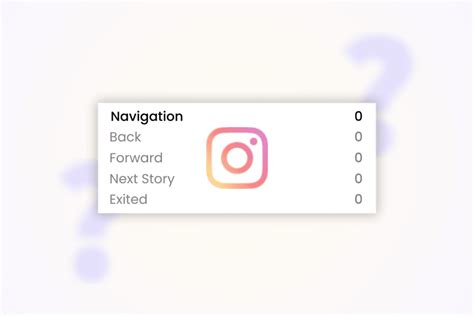
When you look at the total Navigation number for a post or Reel, you are looking at the sum of several vital sub-metrics. These sub-metrics break down exactly where the user went after interacting with your content. Understanding this detailed breakdown is where the real strategy begins.
Deciphering the Four Key Navigation Metrics
The total Navigation figure is always segmented into four categories. Analyzing these individual actions provides rich data on user behavior and the quality of your content.
1. Back
This metric tells you how many times users went back to the previous post after seeing yours. While high overall 'Navigation' is good, a high 'Back' count might not always be positive if taken in isolation, but it's crucial for understanding context.
The Context: If you posted a carousel and the user went back, it means they were actively reviewing previous slides, indicating high interest and strong dwell time. If it was a single image, it might mean they accidentally landed on it and quickly corrected their feed scroll.
2. Forward
This counts how many times users tapped or swiped forward to the next post or story. This metric is most commonly seen in Stories and Carousel posts.
The Context: For Carousels, a high 'Forward' count (especially paired with low 'Exited' numbers) shows that your story structure or sequencing is effective. However, in Stories, a high 'Forward' count often signals low engagement or impatience—the user is trying to skip your content to get to the next person's post.
3. Next Post / Next Story
This is arguably the most common and least desirable form of navigation from a creator’s perspective. It measures how many times users scrolled past your content or exited your Story and moved onto the next account’s media in their feed.
The Context: High 'Next Post' numbers mean your content failed to capture attention long enough to warrant a Profile visit, Save, or Share. Minimizing this number is a core goal for serious creators because a quick skip tells the algorithm your content is not highly relevant to that specific user.
4. Profile Visits (The Golden Ticket)
This is the metric every creator should be tracking intensely. A Profile Visit from a post’s Navigation means that your content was so compelling, useful, or engaging that the user clicked directly onto your username to see more of your work.
The Context: This is a powerful signal of intent and relevance. It suggests the user is moving from passive viewer to potential follower or customer. The higher your Profile Visits from a post, the more confident Instagram is that you are producing high-quality content that warrants further distribution.
Why High Navigation Numbers Are Essential for Algorithmic Favor
Understanding what navigation means is one thing; leveraging it for growth is another. The Instagram algorithm prioritizes content that keeps users on the platform longer and encourages deep interaction—and Navigation is the clearest measurable proxy for that goal.
Instagram wants to serve content that stops the scroll. If your post generates high Navigation (especially Profile Visits and Saves), the algorithm assumes you've achieved two key things:
- High Dwell Time: The user stopped, read the caption, watched the full Reel, or swiped through the carousel. This increased dwell time signals quality.
- Strong Intent: The user took an intentional action (visiting the profile, sharing, or going 'Back' to review). These actions are weighted far more heavily than a simple like.
When Instagram sees a positive Navigation trend—users are actively engaging with your post rather than just scrolling past it—it boosts your content's "Relevance Score." This means your post is more likely to be shown in the Explore Tab, appear higher in the feeds of your followers, and potentially be recommended to new users, leading to higher overall reach.
This cycle of positive feedback is why professional SEO Content Creators focus less on vanity metrics and more on metrics like Navigation and Saves.
Actionable Strategies: How to Improve Your Post Navigation
Since we know what the algorithm is looking for—content that encourages a user to visit your profile or dive deeper—we can design our content specifically to drive those navigational actions.
1. Master the Carousel Format
Carousels are perhaps the single best tool for boosting Navigation metrics like 'Back' and 'Forward.' Since users must actively swipe to consume the full piece of content, carousels force higher dwell time.
- Use Strong Hooks: The first slide must be highly intriguing (e.g., "5 Things You Never Knew About X").
- Create Value on Every Slide: Ensure the user feels rewarded for swiping.
- The Final Slide Call-to-Action: Always include a clear CTA on the final slide, prompting a Save, Share, or (crucially) a Profile Visit ("Click my profile link for the full guide").
2. Optimize Your Caption and Bio Relationship
To drive that coveted 'Profile Visit' metric, your caption needs to act as a compelling lead-in to your bio. Your post should deliver value but also hint at an even greater reward available on your profile.
For example, if you post a tip, end the caption with: "Want the full 10-step checklist? Head to my profile now and click the link in bio!" This provides a clear, high-conversion path, turning a passive viewer into an active navigator.
3. Design Stories for Interactivity
In Stories, high 'Forward' or 'Next Story' counts kill your reach. Combat this by implementing interactive elements that require a tap (and therefore slow the user down):
- Use Stickers: Polls, quizzes, and question boxes force the user to tap to interact, directly boosting your internal navigation metrics.
- Strategic Pauses: Design slides with enough text or visual complexity that they require a second or two to read fully, reducing the chance of an impatient 'Forward' swipe.
4. Focus on Save-Worthy Content
A 'Save' action is a form of Navigation because the user is actively taking steps to categorize your content and ensure they can return to it. Instagram loves Saves because it guarantees the user will return to the platform later.
Create content that falls into the "utility" category: tutorials, recipes, checklists, inspiring quotes, or educational graphics. Content that helps or teaches is content that gets saved, directly signaling to the algorithm that your post has lasting value.
Conclusion: The Future of Instagram Content Strategy
Gone are the days when success on Instagram was simply about the number of likes. Today, if you want consistent visibility and follower growth, you must prove to the algorithm that your content is valuable enough to warrant focused attention.
Understanding "what does navigation mean on Instagram" is the first step toward mastering the platform’s sophisticated ranking system. By consistently analyzing your Insights and strategically optimizing your content to encourage Profile Visits and active consumption (Back/Forward taps), you are not just getting more likes—you are building an audience that is deeply engaged, relevant, and ready to follow your next move.
Start viewing your posts not as standalone images, but as stepping stones in a user's journey. Guide them effectively, and Instagram will reward you with reach.
